Sandhya Shantaram’s lasting legacy
Remembering Sandhya Shantaram, a shining light in cinema
- By Gurmehar --
- Monday, 06 Oct, 2025
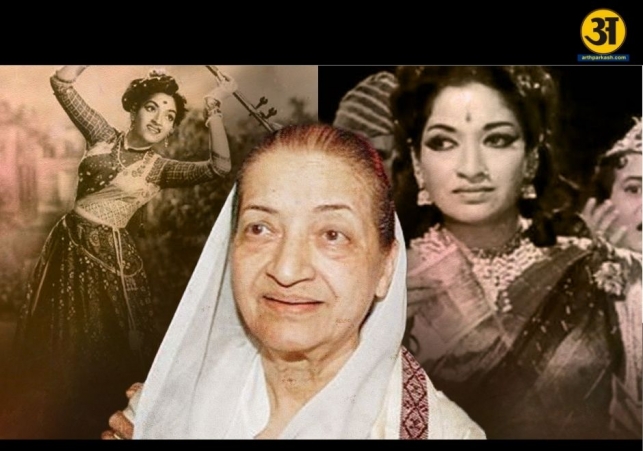
Sandhya Shantaram, who passed away on October 4, 2025, was an artist whose presence seemed made of light. Born Vijaya Deshmukh in Andhra Pradesh, she entered the world of cinema almost by chance and stayed to redefine grace on screen. Her life and career were closely tied to her husband and mentor, legendary filmmaker V. Shantaram, one of Indian cinema’s pioneers who experimented with camera techniques, colour, and light long before modern filmmaking norms. His films often conveyed moral messages through visual storytelling, with early works like Duniya Na Maane (1937) presenting strong, feminist ideas.
Before Sandhya, Shantaram had worked with Jayshree, his muse during the 1940s, on films like Dr. Kotnis Ki Amar Kahani (1946) and Parchhain (1952). Sandhya entered his life as a young woman of eighteen while he was fifty-five. Though the age difference drew public attention, their relationship was primarily a creative partnership. Shantaram guided her in acting and dancing, and she in turn brought emotion and depth to his vision. This collaboration became one of the most celebrated partnerships in Indian cinema.
Sandhya’s first major success was Jhanak Jhanak Payal Baaje (1955), one of India’s earliest Technicolor films. Though she had no formal training in Kathak, she learned from Gopi Krishna and performed complex dances with precision and grace. Her performances in the film, especially in Shiv Tandav and Nain So Nain Naahi Milao, captivated audiences, combining skill, emotion, and devotion. The film won multiple awards, including the National Film Award for Best Feature Film in Hindi and the Filmfare Award for Best Film, but Sandhya’s personal triumph was mastering dance to make the camera “feel” her performance.
A muse, performer, and custodian of Cinema
Two years later, Sandhya starred in Do Aankhen Barah Haath (1957), portraying the human spirit amid a story of prison reform. The film won international acclaim, including the Silver Bear at Berlin and a Golden Globe for promoting understanding. Sandhya’s performances, whether selling toys or singing, added life and warmth to Shantaram’s moral narratives. Her presence humanized abstract ideas, making stories about justice and compassion relatable and memorable.
In Navrang (1959), Sandhya pushed artistic boundaries as she played multiple roles, shifting from mortal to mythic, from male to female, and performing physically challenging dances like the six-matka routine. She became the heart of the film’s magic, embodying transformation, joy, and playfulness. Throughout the 1960s and 1970s, films like Sehra (1963), Taqdeer Ka Fasana, and Pinjara (1972) showcased her evolving artistry. She became known for expressing complex emotions subtly, her eyes and movements conveying longing, strength, or joy without words.
ALSO READ: Rising trend of egg freezing: benefits, risks, and expert insights
ALSO READ: Economic crisis sparks unrest in Azad Kashmir against Pakistan government
Sandhya also contributed behind the camera. In Jal Bin Machhli Nritya Bin Bijli (1971), she helped design choreography and visual sequences, showing her deep understanding of film as both art and storytelling. After Shantaram’s death in 1990, she became the custodian of Rajkamal Studios, preserving its reels, sets, and memories. Visitors recalled her walking through the studio with quiet pride, honoring the legacy of the films she had helped create.
Her accolades included the Filmfare Award (Marathi) for Chandanachi Choli Ang Ang Jali (1975), but she valued the art itself above public recognition. Sandhya’s true achievement lay in being the muse, performer, and steadying force behind one of Indian cinema’s most visionary directors. Her career reflected dedication, humility, and a commitment to the transformative power of cinema.
Sandhya Shantaram’s passing marks the end of an era but leaves a lasting legacy. She was never a loud celebrity; instead, she was the quiet light that stayed after the reels stopped spinning. She reminds us that artistry is not only in performance but in devotion, innovation, and the enduring impact on culture and memory. Her life will continue to inspire future generations of actors, dancers, and filmmakers who seek to merge skill with soul, precision with emotion, and dedication with beauty.
Related News